Before you can scale a channel, you have to be able to trust it. We rebuilt Sticky Be's feed and tracking first, so every decision after that was made on real numbers, and the reach scaled because the foundation could finally hold it.

Michael J. McBride
Founder and CEO, Atelier Commerce
BUILT WITH

Before you can scale a channel, you have to be able to trust it. We rebuilt Sticky Be's feed and tracking first, so every decision after that was made on real numbers, and the reach scaled because the foundation could finally hold it.
Michael J. McBride
Founder and CEO, Atelier Commerce
BUILT WITH
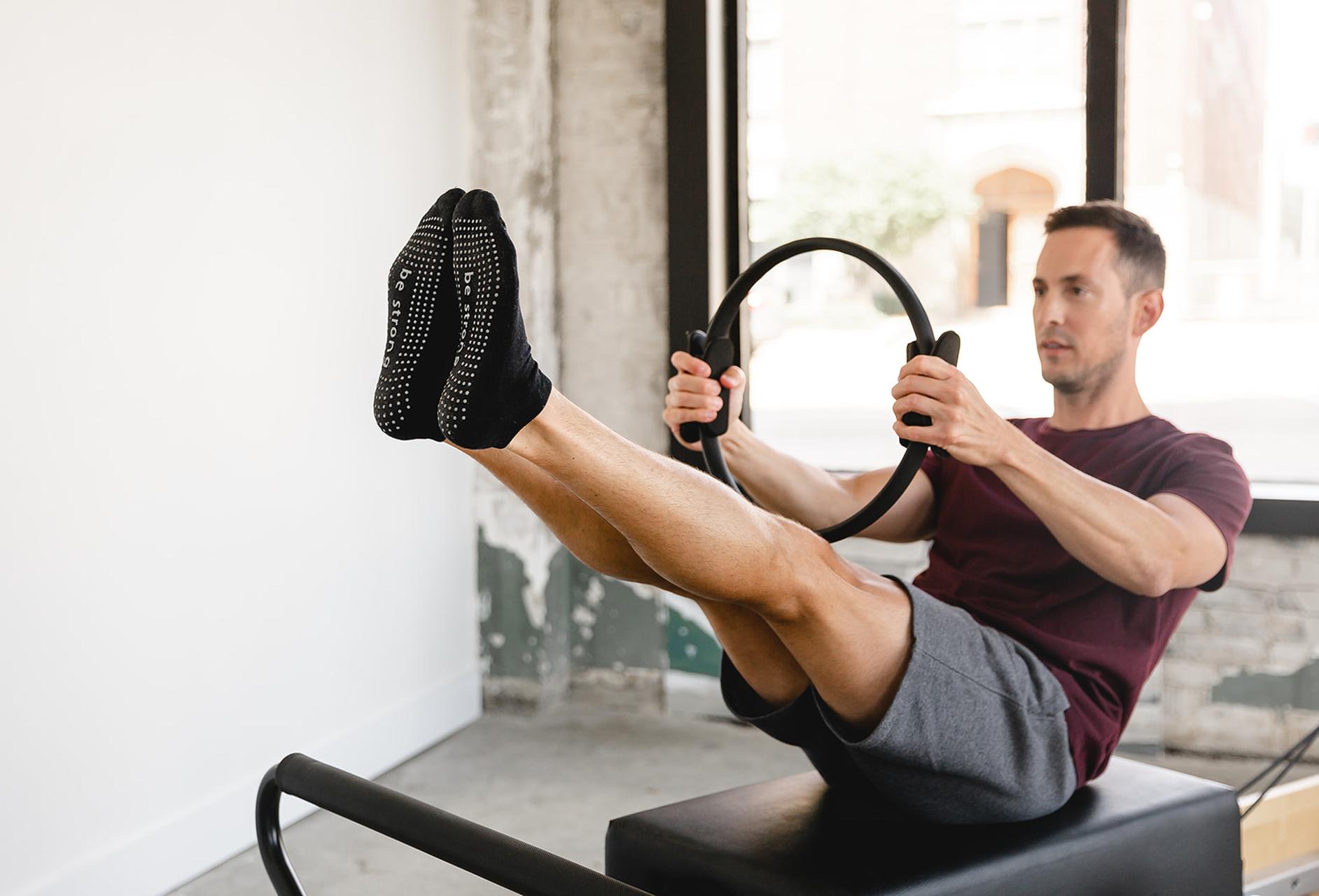
A phone on the passenger seat, seven minutes before morning class, thumb moving through Google for the pair of grip socks that will not slide on the studio floor. The ad has to render, the price has to be right, and the photo has to look like something a person would wear. Every one of those signals lives in the product feed, which almost no one rebuilds before scaling budget. Sticky Be was scaling on a feed the algorithm could barely read, and on tracking that was quietly leaking.
A phone on the passenger seat, seven minutes before morning class, thumb moving through Google for the pair of grip socks that will not slide on the studio floor. The ad has to render, the price has to be right, and the photo has to look like something a person would wear. Every one of those signals lives in the product feed, which almost no one rebuilds before scaling budget. Sticky Be was scaling on a feed the algorithm could barely read, and on tracking that was quietly leaking.

Two engines to feed, one measurement layer that was leaking
Sticky Be Socks came to Atelier Commerce with Google Ads already running and two businesses depending on it, a direct storefront and a wholesale program the paid channel had to start serving in parallel. The measurement was browser side only, so cookies, ad blockers, and bot traffic were distorting conversions and ROAS badly enough that a tracking break during one peak period inflated reported results to a level no one could plan against. Paid search cannot scale on numbers no one trusts. The feed, the layer the whole algorithm reads a catalog through, was another problem entirely. Titles were generic, attributes were thin, and product groups were flat, which meant Google was bidding on the catalog blind.
The picture we drew was practical. Move tracking server side so every downstream decision runs on real business performance. Rewrite the feed so titles, attributes, and product types read like a merchandiser wrote them, not a system. Restructure the account around shopper intent and the two engines, D2C and wholesale, so budget serves both without one crowding the other. Use GA4 and Klaviyo audiences to sharpen prospecting and remarketing at the same time. And add a Be Brave Performance Max campaign at the moments in the year when the brand's own story does the heaviest lifting. Foundation first, then reach.
Two engines to feed, one measurement layer that was leaking
Sticky Be Socks came to Atelier Commerce with Google Ads already running and two businesses depending on it, a direct storefront and a wholesale program the paid channel had to start serving in parallel. The measurement was browser side only, so cookies, ad blockers, and bot traffic were distorting conversions and ROAS badly enough that a tracking break during one peak period inflated reported results to a level no one could plan against. Paid search cannot scale on numbers no one trusts. The feed, the layer the whole algorithm reads a catalog through, was another problem entirely. Titles were generic, attributes were thin, and product groups were flat, which meant Google was bidding on the catalog blind.
The picture we drew was practical. Move tracking server side so every downstream decision runs on real business performance. Rewrite the feed so titles, attributes, and product types read like a merchandiser wrote them, not a system. Restructure the account around shopper intent and the two engines, D2C and wholesale, so budget serves both without one crowding the other. Use GA4 and Klaviyo audiences to sharpen prospecting and remarketing at the same time. And add a Be Brave Performance Max campaign at the moments in the year when the brand's own story does the heaviest lifting. Foundation first, then reach.


A paid search rebuild, from the feed and the tracking up
Before a single bid changed, two layers were repaired. Tracking became trustworthy. The feed became legible.
Littledata was implemented for server side tracking, sending accurate transaction and event data from Shopify into GA4 and the ad platforms. That ended the distortion from cookie loss, ad blockers, and bot traffic, and it made reporting something the team could actually plan against. The product feed was rebuilt and enriched, and Merchant Center trust signals were activated so the catalog rendered fully in Shopping and Performance Max. Campaigns were restructured around product groups, shopper intent, and the two audiences that matter to this brand, D2C shoppers looking for a second pair after a morning class, and wholesale buyers stocking studios and boutiques. GA4 and Klaviyo audiences fed prospecting and remarketing so the account learned from behavior, not just clicks. The seasonal Be Brave Performance Max campaign ran when the mantra on the sock did its heaviest work in the calendar. Search copy and Performance Max assets were tested continuously, and the whole system carried 58 percent more reach on the same monthly budget.
A paid search rebuild, from the feed and the tracking up
Before a single bid changed, two layers were repaired. Tracking became trustworthy. The feed became legible.
Littledata was implemented for server side tracking, sending accurate transaction and event data from Shopify into GA4 and the ad platforms. That ended the distortion from cookie loss, ad blockers, and bot traffic, and it made reporting something the team could actually plan against. The product feed was rebuilt and enriched, and Merchant Center trust signals were activated so the catalog rendered fully in Shopping and Performance Max. Campaigns were restructured around product groups, shopper intent, and the two audiences that matter to this brand, D2C shoppers looking for a second pair after a morning class, and wholesale buyers stocking studios and boutiques. GA4 and Klaviyo audiences fed prospecting and remarketing so the account learned from behavior, not just clicks. The seasonal Be Brave Performance Max campaign ran when the mantra on the sock did its heaviest work in the calendar. Search copy and Performance Max assets were tested continuously, and the whole system carried 58 percent more reach on the same monthly budget.
Success Stories
Scarlett Gasque: The Open Was Never the Problem
A Klaviyo program with strong opens, clean deliverability, and every flow already live. One number told a quieter story. In ninety days the click to open rate climbed, engagement moved from 39.4 percent to 50.7 percent, revenue rose 78 percent, and sessions fell 32 percent. A better audience, not a bigger one.

Scarlett Gasque: The Open Was Never the Problem
A Klaviyo program with strong opens, clean deliverability, and every flow already live. One number told a quieter story. In ninety days the click to open rate climbed, engagement moved from 39.4 percent to 50.7 percent, revenue rose 78 percent, and sessions fell 32 percent. A better audience, not a bigger one.
PXG × Nosto: 104 Days of Compounding Efficiency
PXG activated a full Nosto personalization stack across every major page type of a mature Shopify storefront. In the 104 days that followed, conversion rate rose nearly 25% and revenue per session nearly 28%, on 20% less seasonal traffic than the window before it.

PXG × Nosto: 104 Days of Compounding Efficiency
PXG activated a full Nosto personalization stack across every major page type of a mature Shopify storefront. In the 104 days that followed, conversion rate rose nearly 25% and revenue per session nearly 28%, on 20% less seasonal traffic than the window before it.
Success Stories
Scarlett Gasque: The Open Was Never the Problem
A Klaviyo program with strong opens, clean deliverability, and every flow already live. One number told a quieter story. In ninety days the click to open rate climbed, engagement moved from 39.4 percent to 50.7 percent, revenue rose 78 percent, and sessions fell 32 percent. A better audience, not a bigger one.
PXG × Nosto: 104 Days of Compounding Efficiency
PXG activated a full Nosto personalization stack across every major page type of a mature Shopify storefront. In the 104 days that followed, conversion rate rose nearly 25% and revenue per session nearly 28%, on 20% less seasonal traffic than the window before it.